Young German Netter Adjusting Just Fine
10/24/2000 12:00:00 AM | Men's Tennis
Oct. 24, 2000
Editor's Note: Articles such as this one by Erika Snoberger appear in each edition of the Baylor Bear Insider Report, available upon membership in the Baylor Bear Foundation. For information on joining the Bear Foundation, click here.
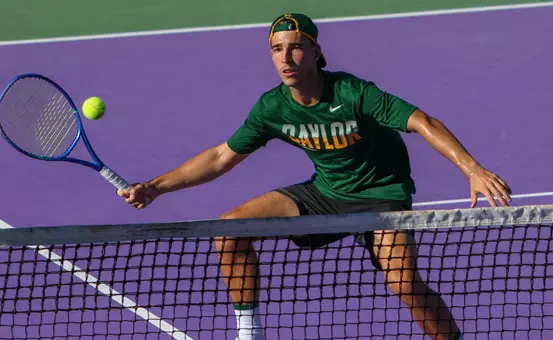
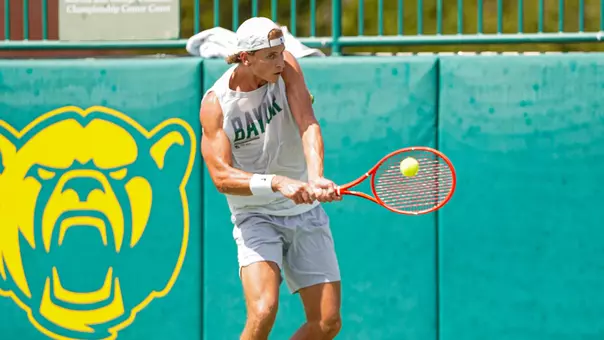
A new language, a new school, a new coach, a new team...and all in a new country. Reiner Neurohr has experienced every one of those things in the past three months. He's the newest addition to the Baylor men's tennis team, and already, a proven winner for the Bears.
Neurohr came to the United States, and Baylor, in August. Tennis may have gotten the freshman from Worms, Germany here, but it certainly wasn't anything like home.
Where tennis is concerned, Neurohr could be considered an old pro. He started his athletic career with soccer, but took up tennis at age eight and has played the game ever since. He comes from a family of athletes, including both parents and a sister who play handball. Originally, he planned to take the route of many European athletic would-be prodigies: to finish high school and go professional. However, an injury toward the end of his high school tennis career halted those plans. But no worries for Neurohr. He simply decided to continue school, and therefore, tennis.
IT WOULD JUST HAVE to be thousands of miles away from home. During his childhood, Neurohr became friends and teammates with Johannes Michalsky, a former Baylor tennis standout. Prior to his high school graduation, Neurohr spoke often with Michalsky, who was already setting the wheels turning in the United States.
"He told (head coach Matt) Knoll about me, and that I wanted to go to college and play tennis," Neurohr said. "I knew I was going to the United States, and Baylor was always on top of the list."
Soon afterward, Knoll contacted Neurohr, and it wasn't long before Neurohr was on a plane headed for Waco.
"Reiner was one of the better players in Germany in his age group," Knoll said. "Because of that, he practiced and played with players much older than himself." Neurohr wasn't at all out of place on the team. Despite having teammates as much as five or six years older than himself, he seemed to fit in just fine. But there were still changes to be made.
"There are a lot of differences," Neurohr said of life in the United States. "I played on clay courts in Germany and on (clay), you really have to fight for points. Here, I had to learn how to play on hard courts. It's definitely an adjustment." Academically and physically, Neurohr said he has been challenged and forced to change some habits to become more US-compatible.
"It's less school than in Germany," he said. "I'm a marketing major, and I'm not used to the types of tests they give here. There's also a lot more reading for my classes. With tennis, there's just more of it and also more work with weights than at home."
Neurohr and the other Baylor tennis newcomers were welcomed to the program with five weeks of intense morning workout, three days a week.
"It was really tough at first," Neurohr said. "The biggest thing about it was that you couldn't be late. If you were late, coach Knoll made the whole team run extra."
It seems the team operates on a special kind of schedule, one that is known as "Knoll Standard Time." And according to the originator himself, Neurohr is getting the hang of it.
"Great teams do this, and we want to be great," Knoll said of his discipline and workout policies. "Everyone is responsible for the effort of everyone, and I think Reiner is coming to appreciate the value of team success."
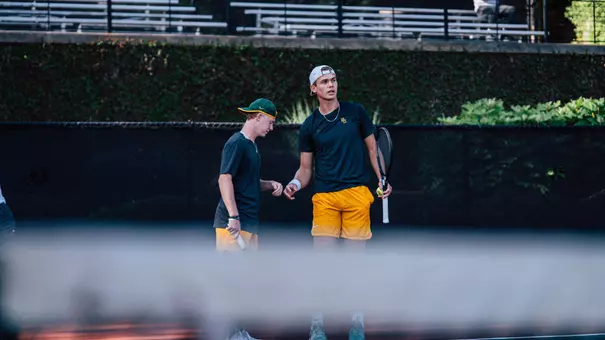
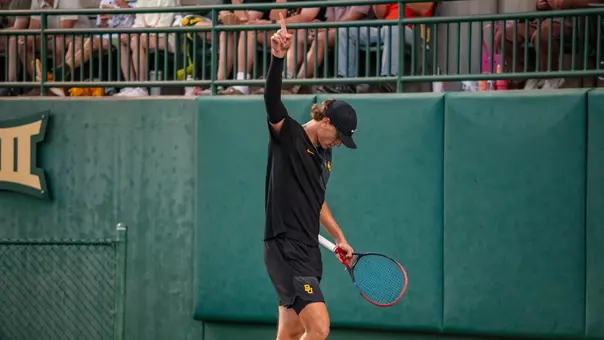
And in his short time at Baylor so far, Neurohr has certainly experienced success. He sprinted to the top of intrateam competition and almost immediately found himself playing -- and winning -- matches against some of the toughest teams in the country. In one of his first tournaments as a Bear, Neurohr posted wins at the No. 1 singles spot against Notre Dame, and at No. 1 doubles with teammate Mark Williams over the Irish.
BUT LOOKING AHEAD to the season as a whole, not everything will be easy for the Bears. After graduating several key players from last season, the team is young and somewhat inexperienced.
"This year is going to be one of the best schedules we've ever played," Knoll said. "If we hope to establish an elite program, we can't afford to have a rebuilding year."
Even with the athletic talent of younger players, Knoll said experience is one advantage that has no substitutes. He said the more experienced players must be ready to lead the team, especially at first.
One of those players is Csongor Bibza. He said it is sometimes frustrating to induct newcomers into the program, but that Neurohr has been one of the most impressive of the group, on and off the court.
"He's one of the shyest guys I've ever met," Bibza said of Neurohr. "You have to teach [the freshmen] everything. College is completely different."
Bibza said one of the hardest things to learn, especially for those players from other countries, is how to be a part of a team while handling the pressures of an otherwise individual sport.
"You're not playing for yourself, but you're still out there alone on the court," he said. "The pressure is huge. If you lose once, you've got to pick it up. If you lose again, someone is waiting on the sidelines to take your place."
But Bibza said Neurohr has done a good job of adjusting to the differences of playing collegiate tennis in the United States.
"Reiner was an established player in Germany," he said. "He can compete. He's got the spirit of a good competitor. In real life, he's really quiet and calm, but on the court he's very gritty. He knows what to do to win, and he's one of the most mature people on our team."
KNOLL AGREED, saying Neurohr has the makings of a champion, but added there are still some aspects of his game to be improved.
"For Reiner to succeed, he's got to be more selfish in wanting to win," Knoll said. "Right now, he's trying to adapt and stake out his own ground. But he's a quality person with the ability to be a winner. It's asking a lot of this group to go out and face teams like we're going to have to face, but we have the talent and character to have a fantastic year."
Neurohr said winning tennis matches has always been his goal, but now he has another reason to do so.
"When you're on a team, you really see what you're working for," he said. "It's like a family. I always expect myself to do the best and get a win, but now it's for my team and not just myself."
Editor's Note: Articles such as this one by Erika Snoberger appear in each edition of the Baylor Bear Insider Report, available upon membership in the Baylor Bear Foundation. For information on joining the Bear Foundation, click here.