MAN OF A THOUSAND JOBS
6/20/2023 4:05:00 PM | General, Health & Wellness
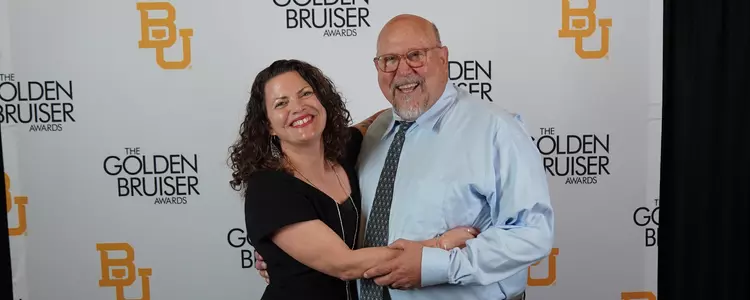
Dr. A has ‘found his thing’ working with student-athletes
By Jerry Hill
Baylor Bear Insider
By the time Dr. Don Arterburn officially joined the "family business" about a year and a half ago, he had four degrees in hand and had already been through three or four different careers as a minister, teacher, therapist and counselor.
"It feels like home," said Dr. A, who had a working relationship with Baylor Athletics through the Counseling Center before joining the department full-time as Director of Athletic Mental Health Services in January of 2022.
Don's father, Junior Arterburn, was the quarterback on Texas Tech's first bowl-winning team in 1951, coached at the school for six years and worked in the admissions office until retiring in 1998. His mother, Joyce, was the founding sponsor of the women's spirit organization, "High Riders," and both were inducted into Texas Tech's Hall of Honor.
His older brother, David Arterburn, was a longtime coach at Lubbock Coronado High School, while his sister, Diana, was a head cheerleader in high school and sponsor of the Fellowship of Christian Athletes huddle group where she taught.
"It's what my family does," Don said. "We've always been interested, always gone to games, always cared about athletes. So, I know enough about it to understand the game and what's going on. But I don't have to be the expert on the athletic performance, I can be the expert on mental health and wellness.
"Truth is, it's just a great fit for me. I keep telling everybody, I'm having so much fun. Maybe I should say, 'Oh, this is hard. I'm working so hard.' But I look forward to coming in every day and I enjoy it. This is something new after working at the Counseling Center for 11 years."
Although Don was a three-sport athlete in high school, "he'd probably tell you that it's been a while since he was running around fields and courts and doing things like that," said Kenny Boyd, Executive Senior Associate AD for Student-Athlete Services.
"But he does try to meet the student-athletes where they are, with the struggles they have," Boyd said. "I think that's one of his gifts is being able to feel like, as he's talking to you, there's a great care and concern in the words and wisdom that he provides. A lot of what Dr. A does is just being present, checking on people, being around at practices and also checking in with other staff."
Growing up in Lubbock, Don played football, basketball and baseball at Coronado High School and had some recruiting interest from smaller schools like West Texas, Howard Payne and ACU. "I liked basketball the most but was more gifted in football," he said.
Much like athletics is the family business, Texas Tech is in his blood.
"My mom was teaching there and my dad was director of graduate admissions. They both retired from there," Don said. "I kind of grew up on campus. My brother and sister that were older than me, they were both at Tech. I don't think I really made a decision about where I would go to school, but I decided that I wasn't going to play sports."
After graduating from Tech in 1984 with a degree in education, Don worked as a youth minister at First Baptist Weatherford while he was working on a master's in religious studies at Southwestern Baptist Seminary that he finished in 1987.
Forging a connection with Jimmy Dorrell through youth ministry camps, Don came to Baylor to work on a master's in health education and lived with the Dorrells for about three years while helping him start Mission Waco.
"Since my mom was teaching and my dad was working at Tech, I wanted to find out if I really wanted to do work in a university," he said. "I had a teaching assistantship where I taught health and human behavior classes and some activity classes like tennis and racquetball."

It was during that time that Don met his wife, LouAnna, a Waco native who returned to her hometown to teach at Viking Hills Elementary after graduating from Stephen. F. Austin University.
"We met at Reconciler's Fellowship, which was a church with about 30 people in it with Jimmy Dorrell," Don said. "The only other two single people in the church were engaged, so the odds were finally in my favor. We got married in 1992 and lived here for about three years before we went back to Lubbock for me to do my PhD."
Needing a doctorate to teach on the college level, and also wanting to be a therapist, Don got his PhD in Marriage and Family Therapy.
During his first year of working on the doctorate, when a supervisor asked how long he had been doing counseling, Don said he had only been doing it for three or four months. "That's why I came to school."
"And he asked me, 'What did you do when you were a youth minister? Don't let us train your talent out of you because you have the natural abilities of someone who's been doing counseling for like 20 years. You have great empathy, you're not stirred up by trouble and you hang in there. You seem to care about the people you work with.'''
Even during his ministry days, the things Don enjoyed the most was "going to lunch with kids, talking to them about their problems, being there in a crisis, helping them get along with their parents or after a break-up. Kind of what I do now."
At the same time he was going to school at Tech for his doctorate, Don had a contract at the Juvenile Justice Center to do individual, group and family counseling with teenagers who were locked up, served as director of the Lubbock County Community Health Center for Mental Health Services, had a private practice as a licensed therapist and was a small-groups pastor at a church.
"I had about five part-time jobs," he said, "and it took me 6 ½ years to finally get my PhD. I finished all the classwork in three years, but then we started having kids and I had all these jobs, and I was burned out."
After completing a dissertation to earn his PhD in 2002, Don said he "had this really good situation" with a thriving private practice in Lubbock and various contracts with the county. But with sons Isaac, Andy and Zane in tow, the family moved back to Waco 15 years ago when LouAnna's father was diagnosed with an aggressive form of cancer.
"We were hoping to be able to be around him for about a year, but he only lived eight weeks after we got back," Don said. "If we had known that, we probably would have just come for the summer. LouAnna is also a therapist and was doing therapy with deaf students in Lubbock."
For the next 2 ½ years, Don commuted back and forth between Waco and Lubbock because he was still teaching classes at Tech and fulfilling his different contracts as a therapist.
In addition to teaching two or three classes a semester at Baylor, Don split his time between the counseling center and wellness center, eventually becoming the addiction specialist at the counseling center.
 "I was at the counseling center for 11 years, but during that time I would also see anyone in athletics that had failed a drug test," he said. "About three or four years ago, they started having me in-house for one day a week. And then two years ago, we started doing two days a week (in athletics). I was trying to be loyal to the counselor center, but then the full-time position opened up (as Director of Mental Health Services)."
With his background in ministry, Dr. A has "the ability to bring in the spiritual, the heart of how a student-athlete may be dealing with a crisis or concern, that just really speaks to his depth of areas that he can support," Boyd said.
"I think it's also an area that's critical for us moving forward to continue to acknowledge how we support the mental health concerns of our student-athletes while also involving that spiritual growth component of it, and how he can provide support in different ways through that process."
Over the last 21 years since he finished his PhD, Arterburn has seen the stigma of mental health diminish greatly and the walls of resistance to seeking help slowly broken down.
Even before they get to college, students in high school and junior high have already started going through counseling.
"And then on the athlete side," he said, "there are people like Michael Phelps and Naomi Osaki and basketball players, baseball players, people in all these different sports, that are saying, 'I'm more important than my batting average or the goals I score.'
"I think COVID really brought attention to it that we don't do well when we're not connected and we don't have relationships of love and belonging. COVID just highlighted how important that is. I think the stigma is down because people are more aware of it, which means that we need to provide more services. It's kind of like, if you build it, they will come."
Don said it's been a difficult transition in the months since Dr. Monique Marsh-Bell left her position as Associate AD for Mental Health Services to take a similar job at SMU.
"I think it's going to take three people to take her place," he said. "Usually, April is the hardest month of the year because students have been in class since August . . . so the intensity goes way up in April. But I would say March was another April this year when Monique left."
Between Don and case manager Trinity Martinez, they are able to "handle a low level of care," he said.
"We can assess and tell if somebody's going to be okay with meeting with the dietician or a psychiatrist and set up those appointments," he said. "Or, are they going to need more of an intense in-patient program during the summer? Or, do they need to be able to do a telehealth intensive outpatient, where they get online for about three hours four days a week with other people that are there with counselors?"
 The Arterburn family went through a particularly difficult stretch several years ago, when LouAnna was diagnosed with an aggressive form of breast cancer and went through a double mastectomy; one of their sons went through seven months of treatment; and "I was changing jobs and doing all this different stuff," Don said.
"I've had a pretty easy life," he said, "but during those three years, it was like, 'What's going to happen next?' She's been cancer-free for six or seven years. They did a year of chemo. And then, during that year, one of my kids was having a bunch of trouble being bullied at school, but we didn't know about it because I was trying to take care of everything else. Get her to chemo, get your homework done, dinner done, wash the clothes, Lou's okay, collapse. Start over and do it again the next day."
Don and LouAnna have downsized as empty-nesters, with Isaac teaching voice lessons in Austin, Andy living in Olympia, Wash., and planning to go to school there and Zane just finishing their second year at Baylor studying theater tech.
"We've been grieving their moving," Don said of Andy and their partner, Seth. "It's going to be an adjustment, and I think downsizing helps. We won't be sitting around where we used to have all these memories. Our new place is really peaceful."
Baylor Bear Insider
By the time Dr. Don Arterburn officially joined the "family business" about a year and a half ago, he had four degrees in hand and had already been through three or four different careers as a minister, teacher, therapist and counselor.
"It feels like home," said Dr. A, who had a working relationship with Baylor Athletics through the Counseling Center before joining the department full-time as Director of Athletic Mental Health Services in January of 2022.
Don's father, Junior Arterburn, was the quarterback on Texas Tech's first bowl-winning team in 1951, coached at the school for six years and worked in the admissions office until retiring in 1998. His mother, Joyce, was the founding sponsor of the women's spirit organization, "High Riders," and both were inducted into Texas Tech's Hall of Honor.
His older brother, David Arterburn, was a longtime coach at Lubbock Coronado High School, while his sister, Diana, was a head cheerleader in high school and sponsor of the Fellowship of Christian Athletes huddle group where she taught.
"It's what my family does," Don said. "We've always been interested, always gone to games, always cared about athletes. So, I know enough about it to understand the game and what's going on. But I don't have to be the expert on the athletic performance, I can be the expert on mental health and wellness.
"Truth is, it's just a great fit for me. I keep telling everybody, I'm having so much fun. Maybe I should say, 'Oh, this is hard. I'm working so hard.' But I look forward to coming in every day and I enjoy it. This is something new after working at the Counseling Center for 11 years."
Although Don was a three-sport athlete in high school, "he'd probably tell you that it's been a while since he was running around fields and courts and doing things like that," said Kenny Boyd, Executive Senior Associate AD for Student-Athlete Services.
"But he does try to meet the student-athletes where they are, with the struggles they have," Boyd said. "I think that's one of his gifts is being able to feel like, as he's talking to you, there's a great care and concern in the words and wisdom that he provides. A lot of what Dr. A does is just being present, checking on people, being around at practices and also checking in with other staff."
Growing up in Lubbock, Don played football, basketball and baseball at Coronado High School and had some recruiting interest from smaller schools like West Texas, Howard Payne and ACU. "I liked basketball the most but was more gifted in football," he said.
Much like athletics is the family business, Texas Tech is in his blood.
"My mom was teaching there and my dad was director of graduate admissions. They both retired from there," Don said. "I kind of grew up on campus. My brother and sister that were older than me, they were both at Tech. I don't think I really made a decision about where I would go to school, but I decided that I wasn't going to play sports."
After graduating from Tech in 1984 with a degree in education, Don worked as a youth minister at First Baptist Weatherford while he was working on a master's in religious studies at Southwestern Baptist Seminary that he finished in 1987.
Forging a connection with Jimmy Dorrell through youth ministry camps, Don came to Baylor to work on a master's in health education and lived with the Dorrells for about three years while helping him start Mission Waco.
"Since my mom was teaching and my dad was working at Tech, I wanted to find out if I really wanted to do work in a university," he said. "I had a teaching assistantship where I taught health and human behavior classes and some activity classes like tennis and racquetball."
It was during that time that Don met his wife, LouAnna, a Waco native who returned to her hometown to teach at Viking Hills Elementary after graduating from Stephen. F. Austin University.
"We met at Reconciler's Fellowship, which was a church with about 30 people in it with Jimmy Dorrell," Don said. "The only other two single people in the church were engaged, so the odds were finally in my favor. We got married in 1992 and lived here for about three years before we went back to Lubbock for me to do my PhD."
Needing a doctorate to teach on the college level, and also wanting to be a therapist, Don got his PhD in Marriage and Family Therapy.
During his first year of working on the doctorate, when a supervisor asked how long he had been doing counseling, Don said he had only been doing it for three or four months. "That's why I came to school."
"And he asked me, 'What did you do when you were a youth minister? Don't let us train your talent out of you because you have the natural abilities of someone who's been doing counseling for like 20 years. You have great empathy, you're not stirred up by trouble and you hang in there. You seem to care about the people you work with.'''
Even during his ministry days, the things Don enjoyed the most was "going to lunch with kids, talking to them about their problems, being there in a crisis, helping them get along with their parents or after a break-up. Kind of what I do now."
At the same time he was going to school at Tech for his doctorate, Don had a contract at the Juvenile Justice Center to do individual, group and family counseling with teenagers who were locked up, served as director of the Lubbock County Community Health Center for Mental Health Services, had a private practice as a licensed therapist and was a small-groups pastor at a church.
"I had about five part-time jobs," he said, "and it took me 6 ½ years to finally get my PhD. I finished all the classwork in three years, but then we started having kids and I had all these jobs, and I was burned out."
After completing a dissertation to earn his PhD in 2002, Don said he "had this really good situation" with a thriving private practice in Lubbock and various contracts with the county. But with sons Isaac, Andy and Zane in tow, the family moved back to Waco 15 years ago when LouAnna's father was diagnosed with an aggressive form of cancer.
"We were hoping to be able to be around him for about a year, but he only lived eight weeks after we got back," Don said. "If we had known that, we probably would have just come for the summer. LouAnna is also a therapist and was doing therapy with deaf students in Lubbock."
For the next 2 ½ years, Don commuted back and forth between Waco and Lubbock because he was still teaching classes at Tech and fulfilling his different contracts as a therapist.
In addition to teaching two or three classes a semester at Baylor, Don split his time between the counseling center and wellness center, eventually becoming the addiction specialist at the counseling center.
"I was at the counseling center for 11 years, but during that time I would also see anyone in athletics that had failed a drug test," he said. "About three or four years ago, they started having me in-house for one day a week. And then two years ago, we started doing two days a week (in athletics). I was trying to be loyal to the counselor center, but then the full-time position opened up (as Director of Mental Health Services)."With his background in ministry, Dr. A has "the ability to bring in the spiritual, the heart of how a student-athlete may be dealing with a crisis or concern, that just really speaks to his depth of areas that he can support," Boyd said.
"I think it's also an area that's critical for us moving forward to continue to acknowledge how we support the mental health concerns of our student-athletes while also involving that spiritual growth component of it, and how he can provide support in different ways through that process."
Over the last 21 years since he finished his PhD, Arterburn has seen the stigma of mental health diminish greatly and the walls of resistance to seeking help slowly broken down.
Even before they get to college, students in high school and junior high have already started going through counseling.
"And then on the athlete side," he said, "there are people like Michael Phelps and Naomi Osaki and basketball players, baseball players, people in all these different sports, that are saying, 'I'm more important than my batting average or the goals I score.'
"I think COVID really brought attention to it that we don't do well when we're not connected and we don't have relationships of love and belonging. COVID just highlighted how important that is. I think the stigma is down because people are more aware of it, which means that we need to provide more services. It's kind of like, if you build it, they will come."
Don said it's been a difficult transition in the months since Dr. Monique Marsh-Bell left her position as Associate AD for Mental Health Services to take a similar job at SMU.
"I think it's going to take three people to take her place," he said. "Usually, April is the hardest month of the year because students have been in class since August . . . so the intensity goes way up in April. But I would say March was another April this year when Monique left."
Between Don and case manager Trinity Martinez, they are able to "handle a low level of care," he said.
"We can assess and tell if somebody's going to be okay with meeting with the dietician or a psychiatrist and set up those appointments," he said. "Or, are they going to need more of an intense in-patient program during the summer? Or, do they need to be able to do a telehealth intensive outpatient, where they get online for about three hours four days a week with other people that are there with counselors?"
The Arterburn family went through a particularly difficult stretch several years ago, when LouAnna was diagnosed with an aggressive form of breast cancer and went through a double mastectomy; one of their sons went through seven months of treatment; and "I was changing jobs and doing all this different stuff," Don said. "I've had a pretty easy life," he said, "but during those three years, it was like, 'What's going to happen next?' She's been cancer-free for six or seven years. They did a year of chemo. And then, during that year, one of my kids was having a bunch of trouble being bullied at school, but we didn't know about it because I was trying to take care of everything else. Get her to chemo, get your homework done, dinner done, wash the clothes, Lou's okay, collapse. Start over and do it again the next day."
Don and LouAnna have downsized as empty-nesters, with Isaac teaching voice lessons in Austin, Andy living in Olympia, Wash., and planning to go to school there and Zane just finishing their second year at Baylor studying theater tech.
"We've been grieving their moving," Don said of Andy and their partner, Seth. "It's going to be an adjustment, and I think downsizing helps. We won't be sitting around where we used to have all these memories. Our new place is really peaceful."


Saturday, September 12
Saturday, September 12
Saturday, September 12
Friday, September 11