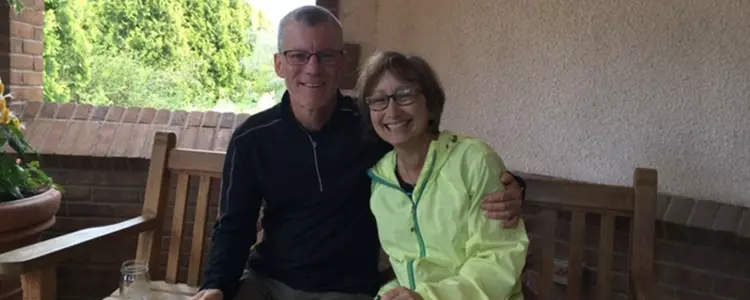
Getting To Know: David Chandler
3/5/2019 10:34:00 AM | General, Men's Basketball
In the last 11 years, he’s watched the Bears make it to two Elite Eights, two other Sweet 16s and win an NIT championship.
By Jerry Hill
Baylor Bear Insider
As rewarding as it was to see senior guard King McClure get back on the court just two weeks after arthroscopic knee surgery – a mountaintop experience, if you will – the valleys are always a lot tougher on David Chandler.
"It might hurt me even more when a guy continues to get hurt and can't get on the floor," said Chandler, Director of Athletic Training for Baylor men's basketball, "because there is no good time to get hurt. These guys want to play basketball, or whatever the sport is. That's what they want to do. Nobody wants to be hurt. So, from an emotional standpoint, it probably affects me more the guys that we can't get out there. That's harder than the highs."
Those peaks and valleys, and the wins and losses, are something Chandler has been dealing with now for almost 40 years since he first came to Baylor as a student trainer in the fall of 1980.
And his roots to the university run even deeper.
"My grandparents started working here in 1963. And I was born in 1961. So really, all I've ever known is Baylor," said Chandler, who was honored before Saturday's game against Texas for his 30-plus years of service. "I asked my mom one time how many years I had been going to Baylor football games, and she said since 1963. So, from '63 until probably when I left in '92, I had been to every Baylor home football game. I've missed a few since then, but a lot of Baylor football."
 After working for a physical therapy clinic in Austin for 2 ½ years, "I got back here as quickly as I could," said David, who returned to Baylor in 1995 and has been here ever since.
Working with men's basketball for the last 11 years, he's watched the Bears make it to two Elite Eights, two other Sweet 16s and win an NIT championship.
"We wouldn't have a program if it wasn't for David Chandler," coach Scott Drew said. "He does an unbelievable job. And the best thing about David is he's a better person than trainer. He really takes care of not only the players, the coaches, the families and everybody, but he really does a good job in being a great mentor, spiritually and socially, for our players as well."
A native of Georgetown, Texas, who followed his dad, Donald Chandler, on various coaching stops around the state, David graduated from Lancaster High School in 1980 and "got my foot in the door to come to Baylor" as a student trainer under Hall of Famers Skip Cox and Mike Sims.
"My brother, Mike, was a student trainer and that kind of got my foot in the door," he said, "but I didn't know that's what I wanted to do. And then, as I came on as a student trainer, I realized, 'Yeah, this is what I want to do.' And it worked out that I was able to stay."
While he assisted with football and baseball, David was primarily the trainer for then-women's basketball head coach Pam Bowers as a 19-year-old sophomore, "and she didn't even have a full-time assistant coach. The staff was basically her, a part-time assistant coach and me. And I was actually responsible for some of the travel as well."
Some of that do-it-all mentality comes from the work ethic shown by Cox and Sims, David said, but "there's a little bit of an NBA model in basketball, in particular, where the athletic trainer in the past did the travel."
"What I always used to say, in my position, I like for the coaches to be able to recruit and coach, and I'll do whatever else I can to help, other than coach and recruit," he said. "Which, obviously, encompasses quite a bit. But now, you have all these operations people where you don't have to do all that. . . . It's hard now, to get that out of our system. In my case, I'm very bad about not saying no and getting my hands involved in too many things."
With Cox moving into an administrative role, David was hired as a full-time assistant when he graduated from Baylor in 1985.
"At that time, you would get an education degree with an emphasis in athletic training," he said. "The education process has changed over time and has really improved. Students now get a degree in athletic training that as of this year is a graduate-level program."
David was working primarily with football, men's basketball and track & field before he left in 1992 to take a position with a physical therapy clinic in Austin.

"My kids were young. At that time, I was able to move and Amy was able to stay home with them," he said. "But, I didn't like it. So basically, I got back here as quickly as I could. And fortunately, we added a position because nobody had left. I was doing football and all rehabilitation until I came over to basketball."
Starting when he was a student, David had always had Sims as his mentor until he retired two years ago. Sims was inducted into the Baylor Athletics Hall of Fame last fall.
"Mike was always there when I needed something," David said. "Nobody could out-work Mike Sims. Nobody cared for his athletes more than Mike Sims did. Just learning those things from him was incredible. All of the accolades that have come Mike's way since he left, that tells you what kind of a guy he is. And everybody in Waco knows Mike."
Chandler also praises a new regime that includes Kenny Boyd, Senior Associate AD for Health & Wellness; Dave Snyder, Director of Athletic Medicine; and Carrie Rubertino-Shearer, Director of Rehabilitation Services.
"I'm learning from them all the time about new technology and new modalities that we have in athletic medicine," David said. "Hopefully, I can help them as well due to my experience. They've been great to me, they are really good hires for Baylor."
Transitioning to men's basketball at the end of the 2007-08 season, when Khali Coltrain left, David was with the team for its first NCAA Tournament berth in 20 years. One of the highlights for him came two years later when the Bears lost to eventual national champion Duke, 78-71, in the Elite Eight before a Baylor-heavy crowd of 47,492 at Reliant Stadium.
"That's probably as close to the mountaintop as you can get," he said. "Such a great environment. That, to me, was a very exciting event in Baylor Athletics . . . We were right on the doorstep of the Final Four. Duke went on to win it, and then Kentucky won it as well when we faced them in the Elite Eight in 2012. Those two experiences were probably the greatest, really, of any that I've had at Baylor."
Having worked with several sports going back to his days as a student, David says, "I've never been around a staff that cared for the athletes more than (Drew) and his staff do."
 "Off the court, they care for the athletes more than any staff I've been around. That comes from Scott, but it's all the guys. And even as we've changed, he's hired people that are in that mold, that really care for the athletes. That makes it fun for me. I think because of that, too, the athletes he recruits fit well into that culture. Because of that, they're good kids to work with."
David has developed close relationships with the players, particularly with ones that are dealing with injuries. "Because of the proximity of the athletic training room to the locker room, I'm always right here with them."
"Me and DC have spent too much time together in the last year, I guess, probably more time than he'd like," said senior guard Makai Mason, who has missed time with various foot injuries. "He's the hardest worker in this program. He's really the glue that keeps this program together."
McClure, who was originally told he wouldn't be able to play basketball again because of his hypertrophic cardiomyopathy heart condition, said Chandler "stuck with me through it all."
"And you didn't give up on me when a lot of people would," he said. "I'm forever grateful, and you're somebody that I'll love for the rest of my life."
Drew said the 57-year-old Chandler is "like a father figure" to everyone in the basketball program.
"You take care of all of us, all hours of the night," he said. "You sacrifice family time, personal time. You do so much more than just take care of us as a trainer."
David met his wife, the former Amy Burleson, when she was a softball player at Baylor for one year under coach Bob Brock and her last three seasons under Paula Young. She is a fifth-grade art teacher at River Valley Intermediate in the Midway school district and plans to retire at the end of the year.
They have two sons, Cole and Will. Cole earned degrees from Baylor and Truett Seminary and serves as a pastor in Denver, working for the non-profit Colorado Village Collaborative in building houses for the homeless, while his wife Kaylanne is also a Baylor graduate and serves as the nursing supervisor for the Colorado Coalition for the Homeless.
Will, the younger son, was an All-American diver who graduated from the University of Texas and is now an organic food farmer in Denver.
 "People ask me all the time," said David, when asked how he dealt with a son going to UT. "The only reason that happened is because we don't have a swimming and diving team here at Baylor. When I went to his meets, people asked me, 'Did you wear burnt orange?' No, I wore brown."
As empty-nesters, David and Amy sold their home two years ago and are leasing an apartment in downtown Waco until they decide where to build. "We moved downtown, and we love it. The only responsibility I have is I need to walk my dog a couple times a day."
Since David spends so much of his working days inside the Ferrell Center, he loves the outdoors.
"I really enjoy riding my bike. But in the winter months, I don't ride much," he said. "I'm not a marathon runner, but I just started running probably three or four years ago. And if I don't do it, that day's not as good. So, I do it first thing in the morning, about three to five miles a day. And then, Amy and I like to go tent camping a couple times in the spring and summer. We just like being outside.
"Hopefully, that running in the morning will help me remain healthy, because I'd like to work here another 10 to 15 years."
Baylor Bear Insider
As rewarding as it was to see senior guard King McClure get back on the court just two weeks after arthroscopic knee surgery – a mountaintop experience, if you will – the valleys are always a lot tougher on David Chandler.
"It might hurt me even more when a guy continues to get hurt and can't get on the floor," said Chandler, Director of Athletic Training for Baylor men's basketball, "because there is no good time to get hurt. These guys want to play basketball, or whatever the sport is. That's what they want to do. Nobody wants to be hurt. So, from an emotional standpoint, it probably affects me more the guys that we can't get out there. That's harder than the highs."
Those peaks and valleys, and the wins and losses, are something Chandler has been dealing with now for almost 40 years since he first came to Baylor as a student trainer in the fall of 1980.
And his roots to the university run even deeper.
"My grandparents started working here in 1963. And I was born in 1961. So really, all I've ever known is Baylor," said Chandler, who was honored before Saturday's game against Texas for his 30-plus years of service. "I asked my mom one time how many years I had been going to Baylor football games, and she said since 1963. So, from '63 until probably when I left in '92, I had been to every Baylor home football game. I've missed a few since then, but a lot of Baylor football."
After working for a physical therapy clinic in Austin for 2 ½ years, "I got back here as quickly as I could," said David, who returned to Baylor in 1995 and has been here ever since.Working with men's basketball for the last 11 years, he's watched the Bears make it to two Elite Eights, two other Sweet 16s and win an NIT championship.
"We wouldn't have a program if it wasn't for David Chandler," coach Scott Drew said. "He does an unbelievable job. And the best thing about David is he's a better person than trainer. He really takes care of not only the players, the coaches, the families and everybody, but he really does a good job in being a great mentor, spiritually and socially, for our players as well."
A native of Georgetown, Texas, who followed his dad, Donald Chandler, on various coaching stops around the state, David graduated from Lancaster High School in 1980 and "got my foot in the door to come to Baylor" as a student trainer under Hall of Famers Skip Cox and Mike Sims.
"My brother, Mike, was a student trainer and that kind of got my foot in the door," he said, "but I didn't know that's what I wanted to do. And then, as I came on as a student trainer, I realized, 'Yeah, this is what I want to do.' And it worked out that I was able to stay."
While he assisted with football and baseball, David was primarily the trainer for then-women's basketball head coach Pam Bowers as a 19-year-old sophomore, "and she didn't even have a full-time assistant coach. The staff was basically her, a part-time assistant coach and me. And I was actually responsible for some of the travel as well."
Some of that do-it-all mentality comes from the work ethic shown by Cox and Sims, David said, but "there's a little bit of an NBA model in basketball, in particular, where the athletic trainer in the past did the travel."
"What I always used to say, in my position, I like for the coaches to be able to recruit and coach, and I'll do whatever else I can to help, other than coach and recruit," he said. "Which, obviously, encompasses quite a bit. But now, you have all these operations people where you don't have to do all that. . . . It's hard now, to get that out of our system. In my case, I'm very bad about not saying no and getting my hands involved in too many things."
With Cox moving into an administrative role, David was hired as a full-time assistant when he graduated from Baylor in 1985.
"At that time, you would get an education degree with an emphasis in athletic training," he said. "The education process has changed over time and has really improved. Students now get a degree in athletic training that as of this year is a graduate-level program."
David was working primarily with football, men's basketball and track & field before he left in 1992 to take a position with a physical therapy clinic in Austin.
"My kids were young. At that time, I was able to move and Amy was able to stay home with them," he said. "But, I didn't like it. So basically, I got back here as quickly as I could. And fortunately, we added a position because nobody had left. I was doing football and all rehabilitation until I came over to basketball."
Starting when he was a student, David had always had Sims as his mentor until he retired two years ago. Sims was inducted into the Baylor Athletics Hall of Fame last fall.
"Mike was always there when I needed something," David said. "Nobody could out-work Mike Sims. Nobody cared for his athletes more than Mike Sims did. Just learning those things from him was incredible. All of the accolades that have come Mike's way since he left, that tells you what kind of a guy he is. And everybody in Waco knows Mike."
Chandler also praises a new regime that includes Kenny Boyd, Senior Associate AD for Health & Wellness; Dave Snyder, Director of Athletic Medicine; and Carrie Rubertino-Shearer, Director of Rehabilitation Services.
"I'm learning from them all the time about new technology and new modalities that we have in athletic medicine," David said. "Hopefully, I can help them as well due to my experience. They've been great to me, they are really good hires for Baylor."
Transitioning to men's basketball at the end of the 2007-08 season, when Khali Coltrain left, David was with the team for its first NCAA Tournament berth in 20 years. One of the highlights for him came two years later when the Bears lost to eventual national champion Duke, 78-71, in the Elite Eight before a Baylor-heavy crowd of 47,492 at Reliant Stadium.
"That's probably as close to the mountaintop as you can get," he said. "Such a great environment. That, to me, was a very exciting event in Baylor Athletics . . . We were right on the doorstep of the Final Four. Duke went on to win it, and then Kentucky won it as well when we faced them in the Elite Eight in 2012. Those two experiences were probably the greatest, really, of any that I've had at Baylor."
Having worked with several sports going back to his days as a student, David says, "I've never been around a staff that cared for the athletes more than (Drew) and his staff do."
"Off the court, they care for the athletes more than any staff I've been around. That comes from Scott, but it's all the guys. And even as we've changed, he's hired people that are in that mold, that really care for the athletes. That makes it fun for me. I think because of that, too, the athletes he recruits fit well into that culture. Because of that, they're good kids to work with."David has developed close relationships with the players, particularly with ones that are dealing with injuries. "Because of the proximity of the athletic training room to the locker room, I'm always right here with them."
"Me and DC have spent too much time together in the last year, I guess, probably more time than he'd like," said senior guard Makai Mason, who has missed time with various foot injuries. "He's the hardest worker in this program. He's really the glue that keeps this program together."
McClure, who was originally told he wouldn't be able to play basketball again because of his hypertrophic cardiomyopathy heart condition, said Chandler "stuck with me through it all."
"And you didn't give up on me when a lot of people would," he said. "I'm forever grateful, and you're somebody that I'll love for the rest of my life."
Drew said the 57-year-old Chandler is "like a father figure" to everyone in the basketball program.
"You take care of all of us, all hours of the night," he said. "You sacrifice family time, personal time. You do so much more than just take care of us as a trainer."
David met his wife, the former Amy Burleson, when she was a softball player at Baylor for one year under coach Bob Brock and her last three seasons under Paula Young. She is a fifth-grade art teacher at River Valley Intermediate in the Midway school district and plans to retire at the end of the year.
They have two sons, Cole and Will. Cole earned degrees from Baylor and Truett Seminary and serves as a pastor in Denver, working for the non-profit Colorado Village Collaborative in building houses for the homeless, while his wife Kaylanne is also a Baylor graduate and serves as the nursing supervisor for the Colorado Coalition for the Homeless.
Will, the younger son, was an All-American diver who graduated from the University of Texas and is now an organic food farmer in Denver.
"People ask me all the time," said David, when asked how he dealt with a son going to UT. "The only reason that happened is because we don't have a swimming and diving team here at Baylor. When I went to his meets, people asked me, 'Did you wear burnt orange?' No, I wore brown."As empty-nesters, David and Amy sold their home two years ago and are leasing an apartment in downtown Waco until they decide where to build. "We moved downtown, and we love it. The only responsibility I have is I need to walk my dog a couple times a day."
Since David spends so much of his working days inside the Ferrell Center, he loves the outdoors.
"I really enjoy riding my bike. But in the winter months, I don't ride much," he said. "I'm not a marathon runner, but I just started running probably three or four years ago. And if I don't do it, that day's not as good. So, I do it first thing in the morning, about three to five miles a day. And then, Amy and I like to go tent camping a couple times in the spring and summer. We just like being outside.
"Hopefully, that running in the morning will help me remain healthy, because I'd like to work here another 10 to 15 years."
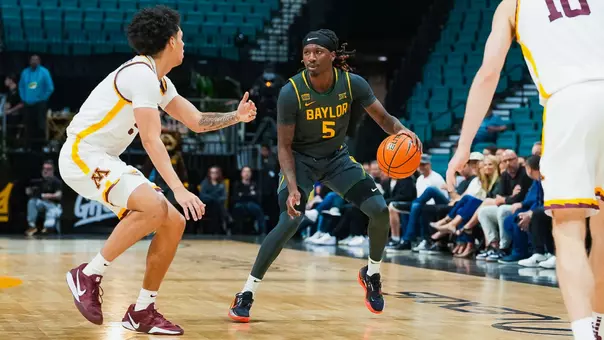
Players Mentioned

G
/ Men's Basketball
G
/ Men's BasketballBaylor Softball: Highlights vs. Houston (Game 3) | April 4, 2026
Sunday, April 05
Baylor Basketball (M): Postgame vs. Oklahoma | April 4, 2026
Saturday, April 04
Baylor Basketball (M): Highlights vs. Oklahoma | April 4, 2026
Saturday, April 04
Baylor Baseball: Highlights vs. BYU (Game 2) | April 3, 2026
Saturday, April 04